Five techniques.
Here's how to pick the right one.
Not every technique works for every sport. Sublimation breathes, embroidery adds texture, and screen printing scales efficiently. Compare them below, or just tell us what you're making and we'll choose the best method for you.
Precision Application.
Scroll through our five core production methods to understand the minimums, timelines, and perfect use cases for each.
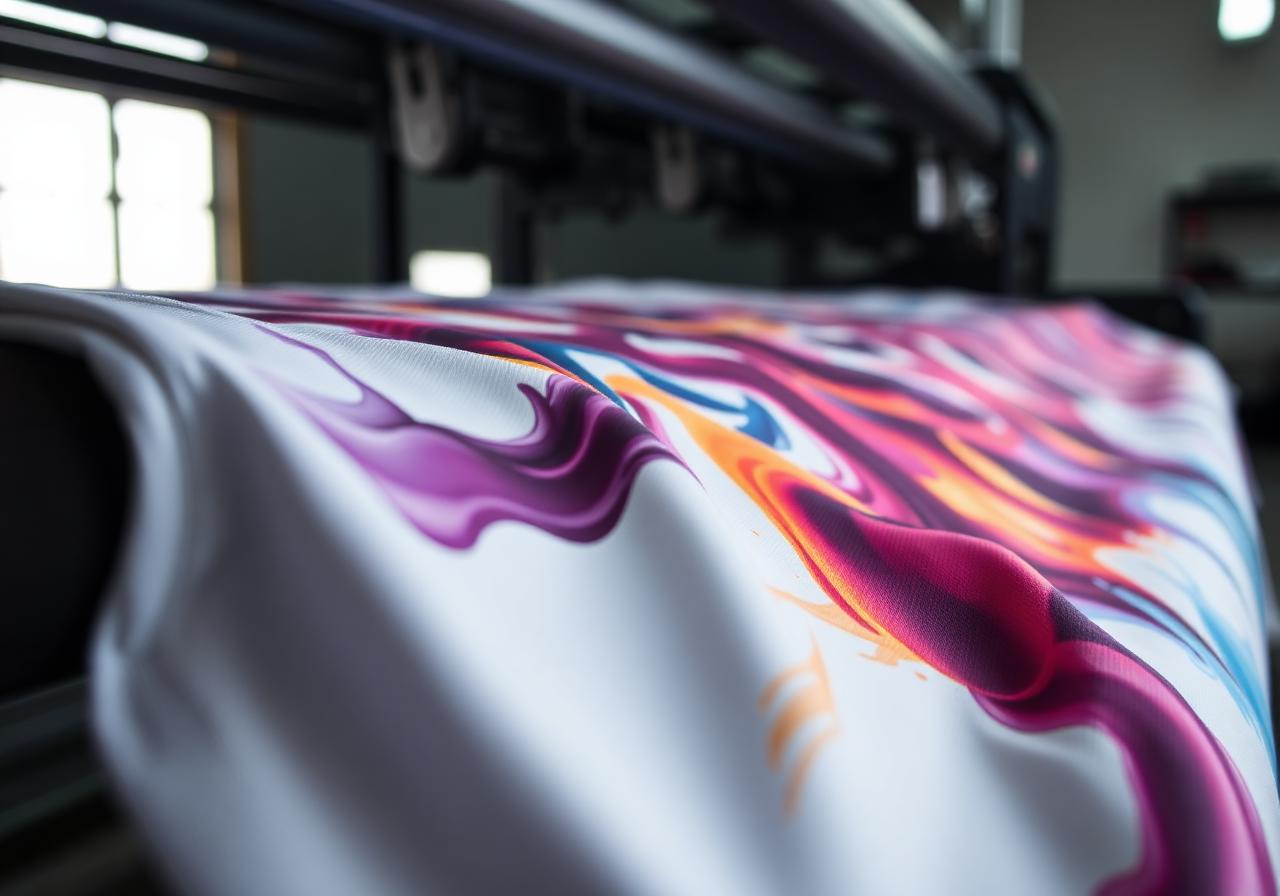
Sublimation
Ink is heat-pressed directly into polyester fibers. The design becomes part of the fabric.
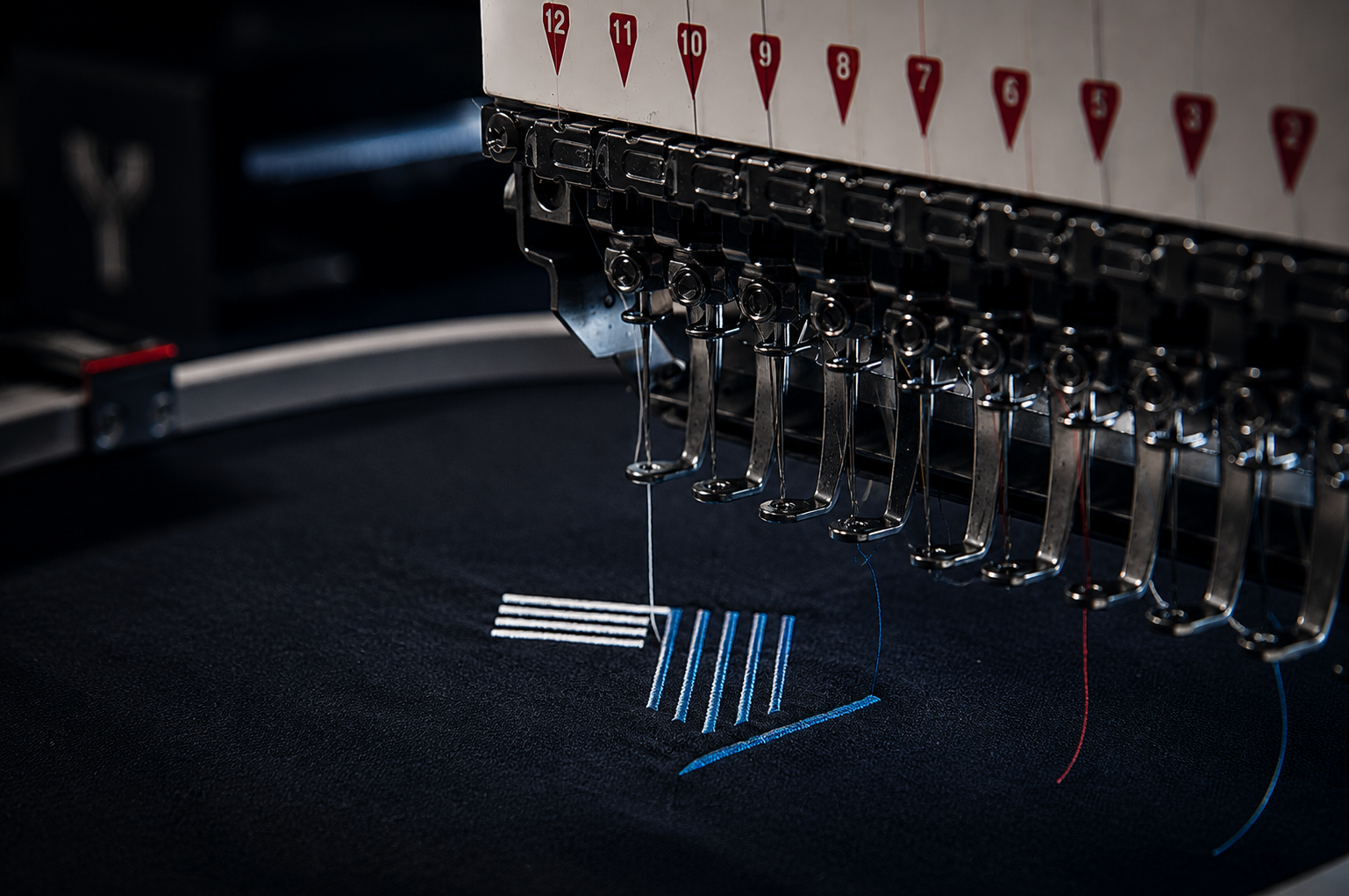
Embroidery
Industrial multi-head machines stitch your logo directly into the garment for a premium feel.
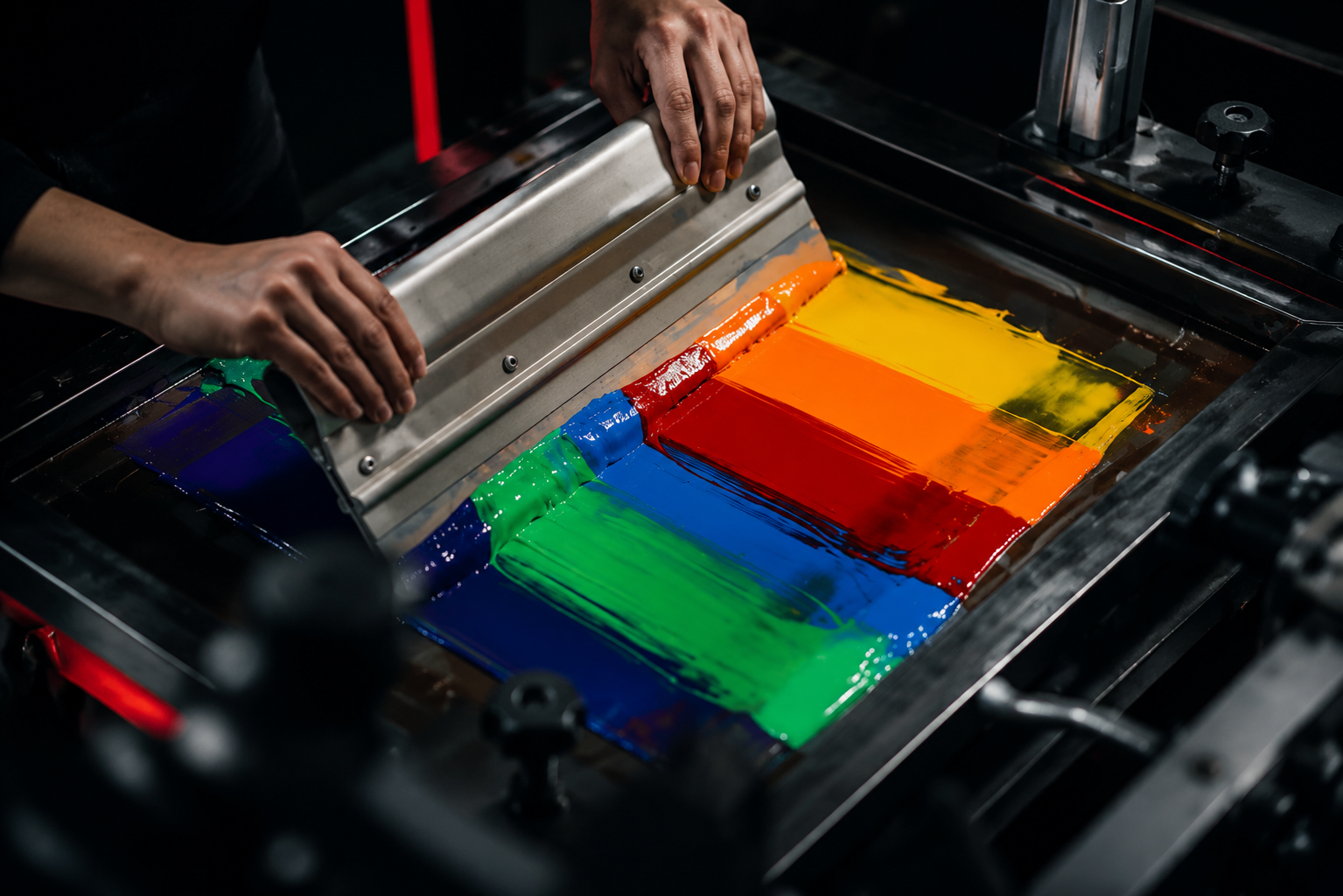
Screen Print
The gold standard for bold, solid ink layouts. Vibrant, thick, and durable.
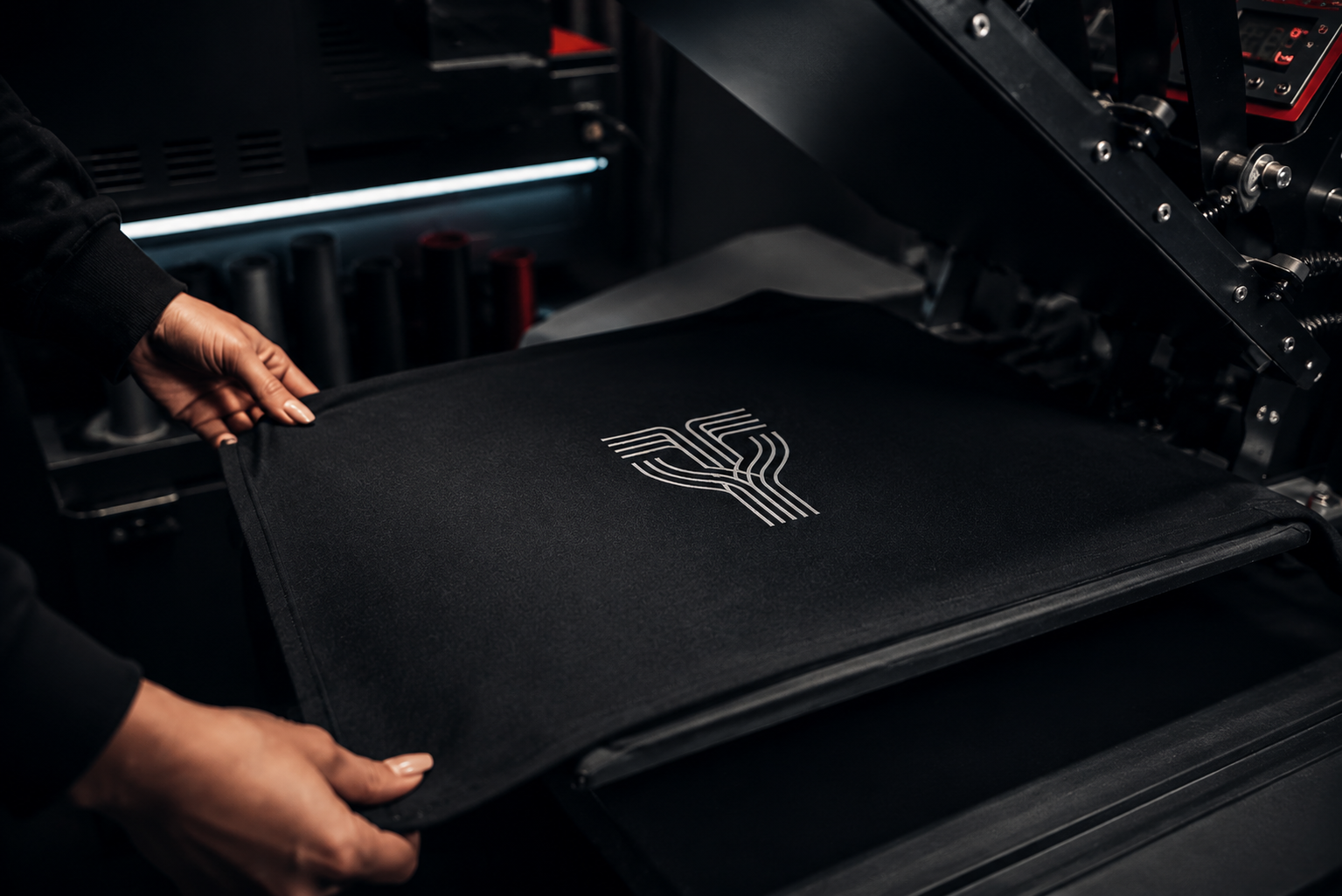
DTF Transfer
Direct-to-film transfers provide photo-realistic detail and exact color matching.
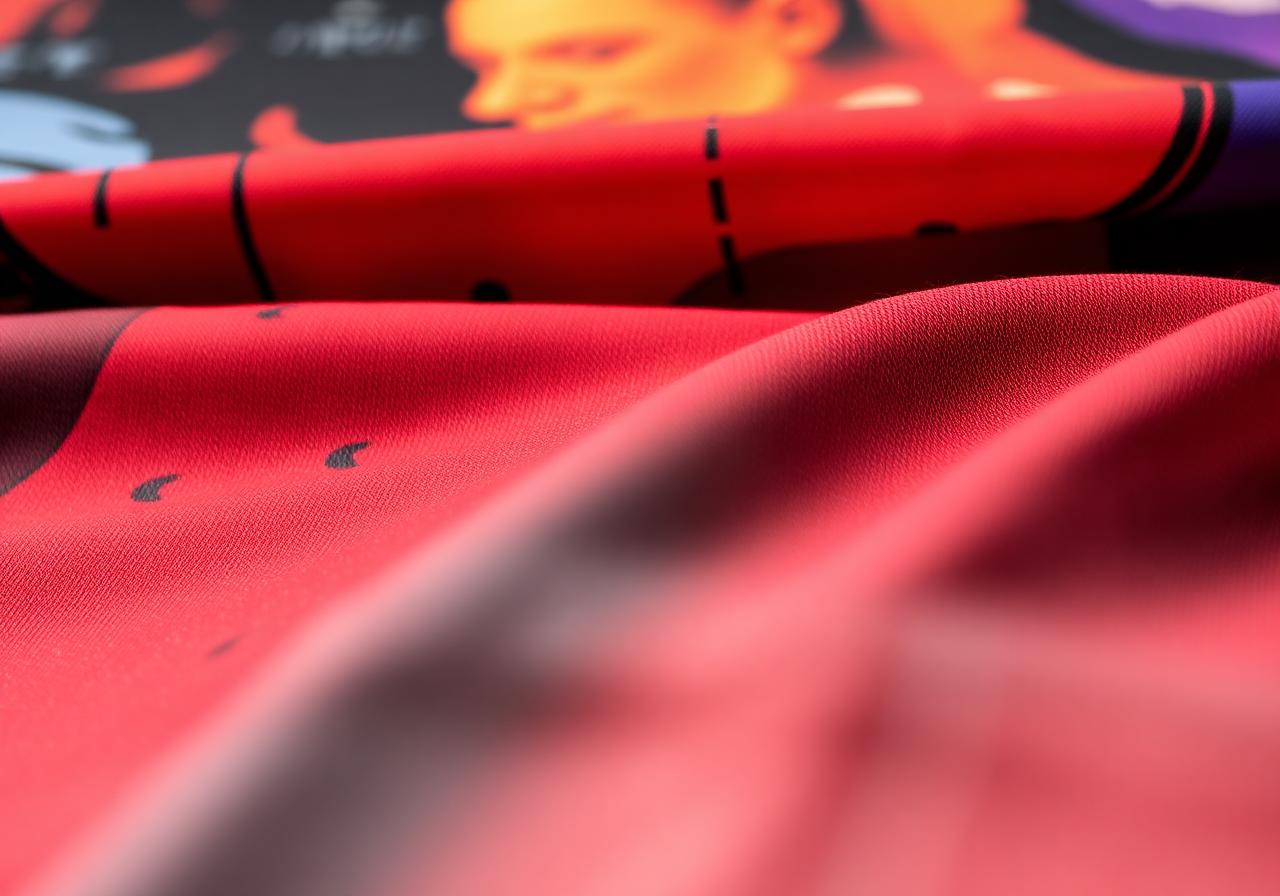
DTG
Direct jet printing into soft cotton fibers for a vintage, breathable finish.
Preparing your designs for production.
You do not need to be a professional designer to work with us. We guide you through the process, but if you want to speed up production, here is a calm guide to file preparation.
Why they matter
Vector graphics (.AI, .EPS, or .PDF) use mathematical paths rather than pixels. This means they can be scaled infinitely to fit a broad banner or a tiny cap crest without losing sharp details or becoming blurry.
CMYK vs RGB vs Pantone
Screens use RGB colors, but fabric printing uses CMYK inks. For absolute precision, share a Solid Coated Pantone reference (PMS). Our dye sublimation and screen printing processes match Pantone formulas exactly.
For photographs & DTG
If your artwork uses photographs or digital paintings (.PSD or .PNG), make sure the file is exported at 300 DPI at full print size. Low-resolution web graphics (72 DPI) will look blurry when printed on fabric.